Most of the world's renowned museums display only a small fraction of their collections. On average, between 80% and 90% of items are kept in the storage rooms: spaces away from the public gaze, where an essential part of the institutions' activity takes place.
Museums have the threefold mission of research, safeguarding and communication of their collections. Exhibitions, the public face of their activity, are one of the most important forms of communication with visitors. Because they are visible, publicised and, these days, instagrammable, they end up being mistaken for the institutions themselves.
But it is in the storage rooms that the other two legs of the tripod happen: the research and safeguarding activities, which involve the cleaning, conservation, restoration, documentation and, in some cases, digitisation of collections.
In this post, we will explain how a museum storage room works.
What is inside museum storage rooms?
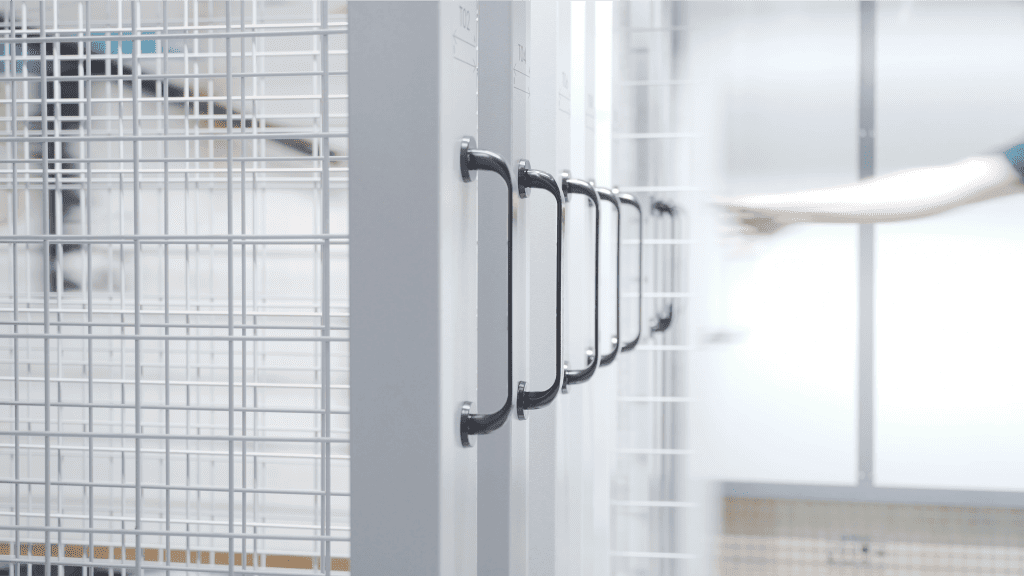
Good-quality storage rooms are extremely organised places, equipped with furniture designed specifically for storing the collection's objects. In art museums, sliding racks are common: a kind of cabinet made of steel and wire mesh on a sliding system, like a large vertical chest of drawers, which allows paintings and canvases to be stored hanging.
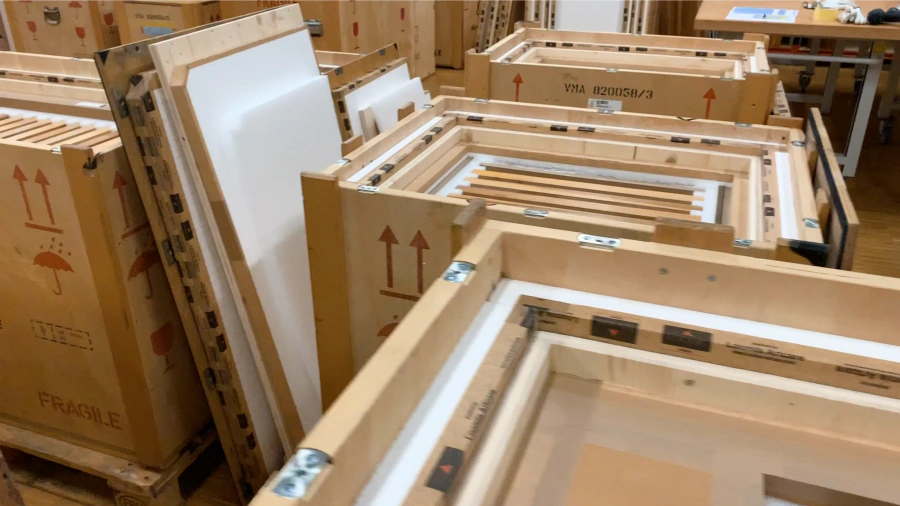
Plan chests are also used: drawer units closer to traditional ones, but for storing large-format papers such as prints, drawings and, as the name suggests, maps and charts. Plan chests can be adapted to store other types of objects, such as textiles. Large and small sculptures, in turn, may require the construction of custom crates or containers.
Given the large volume of items stored, in some cases tens of thousands, systematising the information is essential. Whether in paper files or in digital form, each storage room keeps a documented record of the exact location of every work, with codes identifying the furniture and the object.
This avoids one of the great nightmares of a large collection: dissociation, the technical term for the loss of objects or of the information related to them.
Why do museums have far more works than they can display?
Back to the start of this post: exhibiting is only one of a museum's functions. Institutions also count the preservation and research of collections among their core missions, activities that largely take place in the storage rooms. That is why, in addition to reinforced security, including against fire, these spaces also have controlled environmental conditions and strict routines of cleaning and pest prevention.
Moreover, it is mainly from their storage rooms that museums can offer the public temporary exhibitions that cast new relationships and perspectives on the collection, also drawing on loans from other institutions.
Where are museum storage rooms located?
When the museum has space at its headquarters, the storage area occupies one or several rooms in spaces without public access. They are generally places with reinforced security, to which not even all museum staff have access. In fact, only those who really need to be there enter the storage room: generally conservators, curators and documentation specialists.
Some institutions keep adjoining rooms where visiting specialists are received to access works or documents, which are removed from the storage room by museum staff and brought there for as long as the work takes. Afterwards, they return to storage, without the outsider ever having to enter the room itself.
As collections grow, space becomes scarce, and museums end up resorting to external properties or warehouses to expand their storage capacity.
Clé Chenue and Brazilian museums
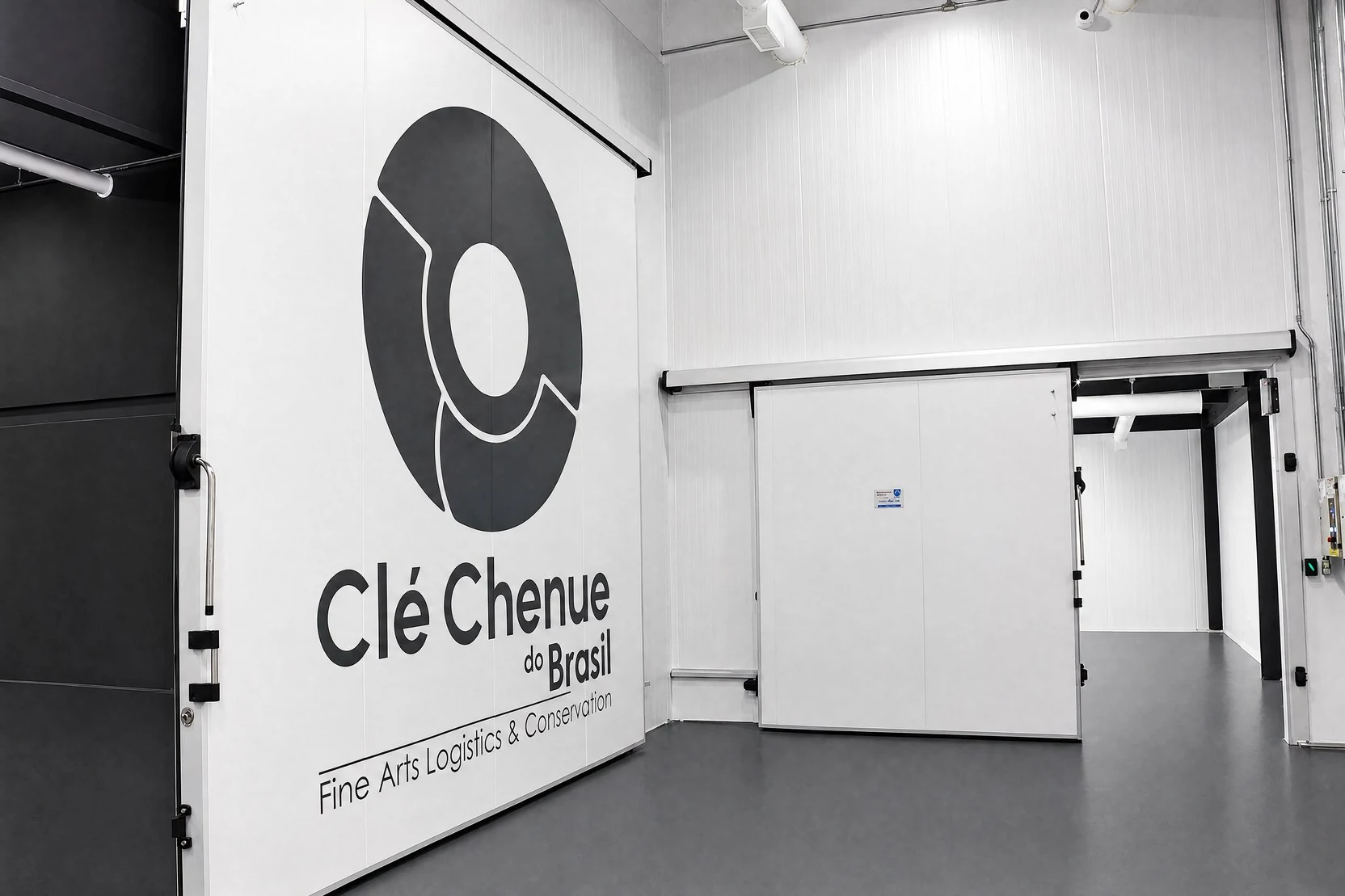
As the only private art storage facility in Brazil with museum standards of security, environmental control and confidentiality, Clé Chenue do Brasil counts among its clients some of the most important Brazilian museums, which keep private spaces for the storage of part of their collections. Some institutions also use the double-height room for the storage of large-scale sculptures. Only authorised personnel may enter each space, which is also equipped to receive teams of conservators and documentation specialists for cleaning and cataloguing activities.
Technology at the service of every client
All clients of Clé Chenue do Brasil enjoy the same standard of quality provided to museums. There are 4,500 square metres of storage area, 100% climate-controlled and with 24×7 security and fire-prevention systems. Like the museums, the private collector can also rent a private room from 25m² or, if preferred, store their works in a shared area managed by Clé Chenue.
Talk to our specialists to learn more about the available solutions.