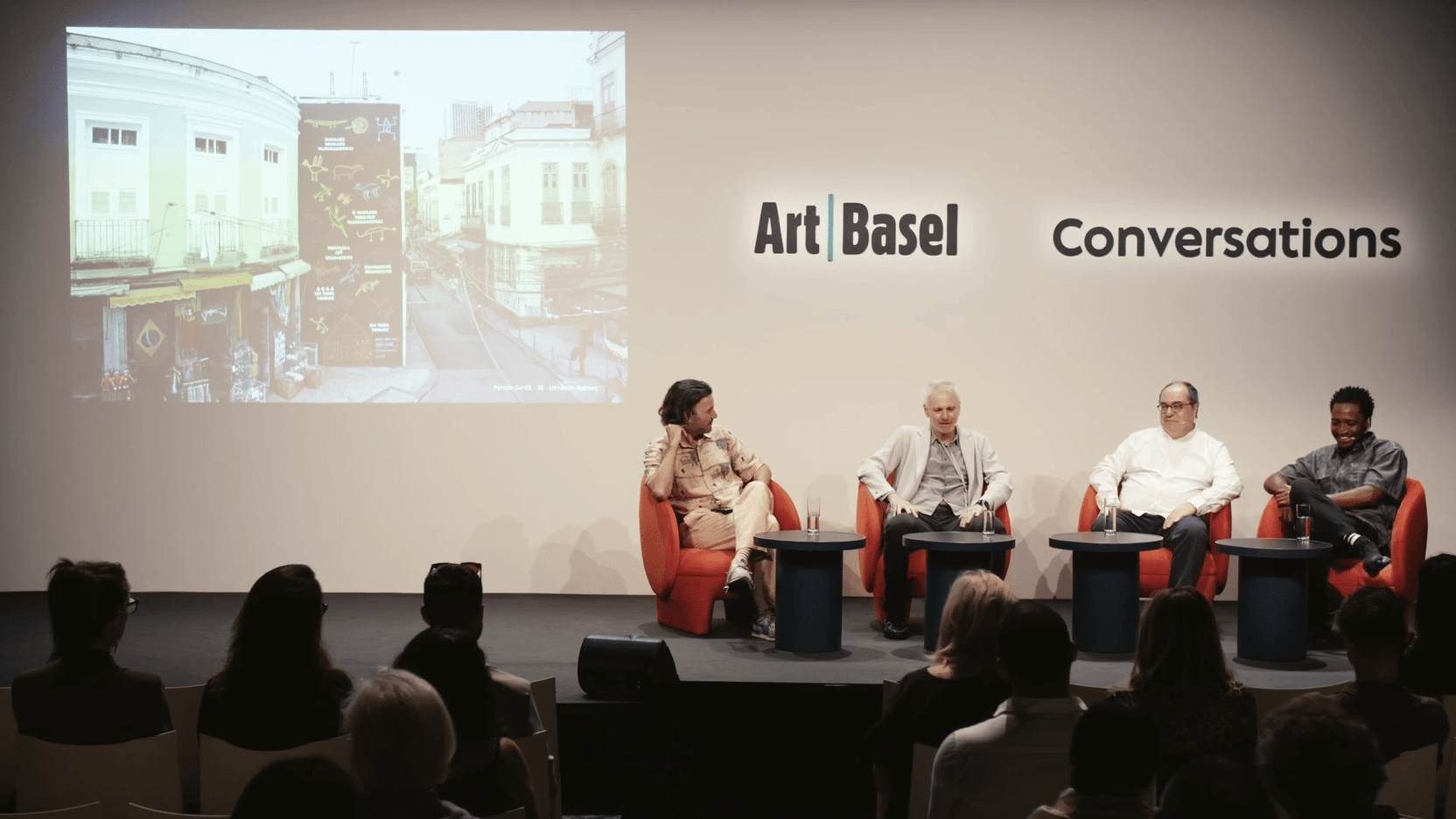
Brazilian art was one of the highlights of the Conversations series held by the Art Basel Miami fair and curated by Emily Butler. The panel The Art Market in 2023: Collection in Brazil featured collector Pedro Barbosa, gallerist Márcio Botner (A Gentil Carioca) and curator Thiago de Paula Souza. Moderated by writer Oliver Basciano, the panel's main theme was the engagement of contemporary art with the pressing issues of Brazilian reality.
Márcio Botner: art is concrete, the market is abstract
"Art is concrete, the market is abstract," said Márcio Botner, reflecting on the trajectory of A Gentil Carioca in Rio de Janeiro. The gallery opened in 2003 in the Saara district, in downtown Rio de Janeiro, at a time when, according to him, there were few institutions supporting emerging artists; besides Botner, the gallery was founded by artists Ernesto Neto and Laura Lima. For many years, the gallery carried out artistic interventions on Arpoador beach through the Alalaô project, which helped popularize the visual arts in the city.
Pedro Barbosa: buying a work is a contract
Pedro Barbosa, in turn, stressed the relationship of trust that should exist between the collector and the artist from whom a work is acquired. "When an artist trusts me and sells me a work of art, it's a contract, you know? I have an obligation to that work and to the artist. It's not just an asset that goes on my income tax return."
Barbosa urged Brazilian galleries to effectively support Black and Indigenous artists, rather than simply putting them on their rosters to meet a market demand. "The human capital we have in Brazil is insanely good, but it cannot be treated as labor in an opportunistic way," he said.
Thiago de Paula Souza: looking at artists across the board
Thiago de Paula Souza, who divides his time between São Paulo and Berlin, pointed to the need for artists to be seen in a cross-cutting way; he himself is a Black man, but stressed that his experience cannot be reduced to the color of his skin. Overall, the panelists' view of the future of art in Brazil is optimistic, as Thiago summed up: "A lot has changed in 10 years in terms of how institutions, galleries, curators and collectors are organizing themselves and thinking about what Brazilian contemporary art can be, or what the role of contemporary art is in social justice."
The debate was streamed live on YouTube and remains available on the Art Basel channel (the participants speak in English).