
Every collection that grows reaches the same point: the works no longer fit where they are. The next question is usually where to store them, and two answers appear that seem equivalent. One is the art storage facility. The other is self storage.
The difference between them lies not in the size of the space or the price per square meter, but in what happens to the work during the months when no one is looking at it.
What is an art storage facility?
Art storage is the name of the space that houses the part of the collection not on display. Between 80% and 90% of the items in a renowned museum are kept in these areas, not on view. It is there that cleaning, conservation, documentation and research take place.
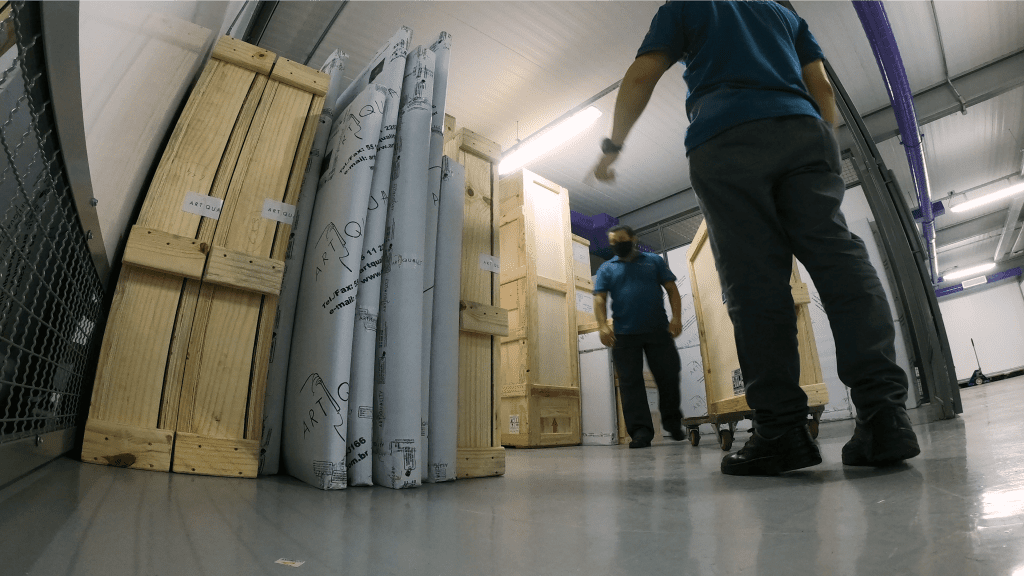
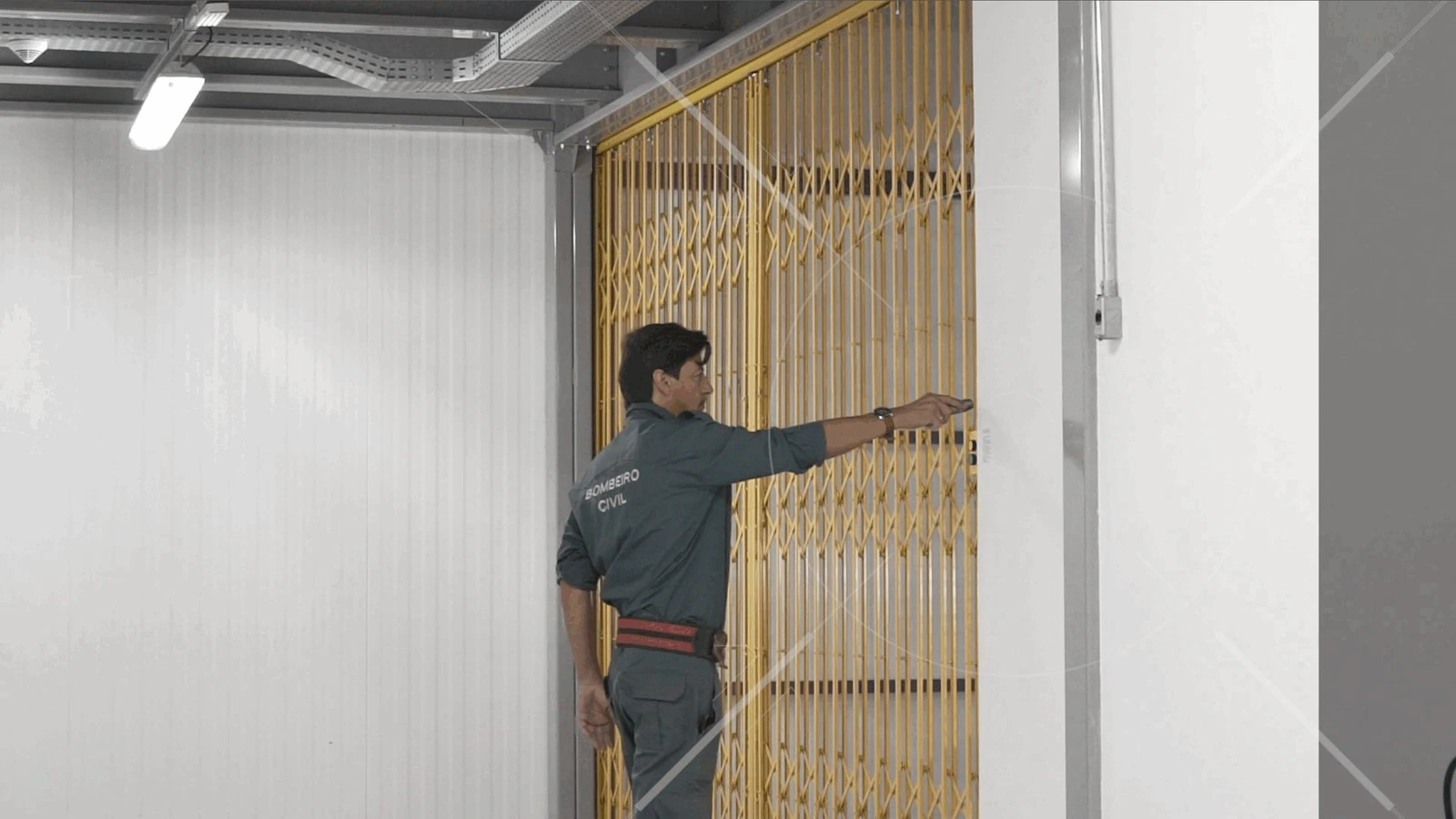
That is why an art storage facility is not a warehouse. It has purpose-built furniture, such as painting racks, sliding steel and mesh screens where the canvases hang, and flat files, shallow drawer units for large-format paper. Relative humidity and temperature are controlled continuously, there is a pest prevention routine, and a system records the exact location of each work, to avoid dissociation, the technical term for the loss of an object or of the information linked to it.
What is self storage?
Self storage is a real estate model. The customer rents a unit, receives a key and stores whatever they want, with independent access and flexible terms. It is an efficient solution for inventory, furniture not currently in use, documents and display materials. The Brazilian market has serious operators in this segment.
What the model does not usually offer, unless stated in the contract, is continuous environmental control. An air-conditioned unit is not the same thing as an environment with stable relative humidity. There is also usually no pest monitoring, no fire prevention designed for high-value collections, and no team trained in handling.
The distinction matters because environmental variation acts slowly. The risk of keeping a work in an uncontrolled environment does not show up at the moment of retrieval, and that is why it is underestimated when the contract is signed.
The six criteria that separate the two models
Continuous climate control.
The international reference for collection storage is 45% to 55% relative humidity, with temperature between 18°C and 22°C. Ask whether the control is continuous and whether a record of the history exists.
Stability within the range.
Materials such as canvas, paper and wood exchange moisture with the air and respond to variation by changing dimension, which can damage the surface of the work. International guidelines accept fluctuation within defined limits and in gradual form. What causes concern is rapid, repeated oscillation.
Fire prevention suited to collections.
A conventional system protects the structure of the building. A system designed for art collections and rare objects considers other factors and multiplies the forms of prevention: a civil firefighter on duty 24 hours a day, sealed rooms separated by fire doors.
Access control and confidentiality.
In a museum-standard art storage facility, only those who need to enter do so, and there is a record of who entered. For private collectors, estates and corporate collections, confidentiality is part of the service.
The team that handles the works.
A large share of the damage to collections happens during movement. Whoever takes a work off the shelf needs to know how to take it off.
Documentation.
Without records of location and condition, a large collection loses track of itself. The space needs the infrastructure for conservators and documentation specialists to work inside it.
When self storage does the job
Storage of framing and packing materials, catalogues, display pieces and gallery furniture. The point is not to avoid self storage, but not to use it for what calls for art storage.
What to ask before signing
Six straightforward questions:
- What relative humidity and temperature range is maintained?
- Is there a historical record of these parameters?
- How does the fire prevention system work?
- Who has access to the space where the work will be kept?
- Who handles the work on the way in and on the way out?
- How is the location of each piece recorded?
"Self storage is a good solution for items associated with an art collection, but not for the collection itself. Works of art need very specific care that is not part of the business model of an ordinary storage warehouse. That is what art storage facilities are for," says Diogo Mantovani, CEO of Clé Chenue do Brasil.
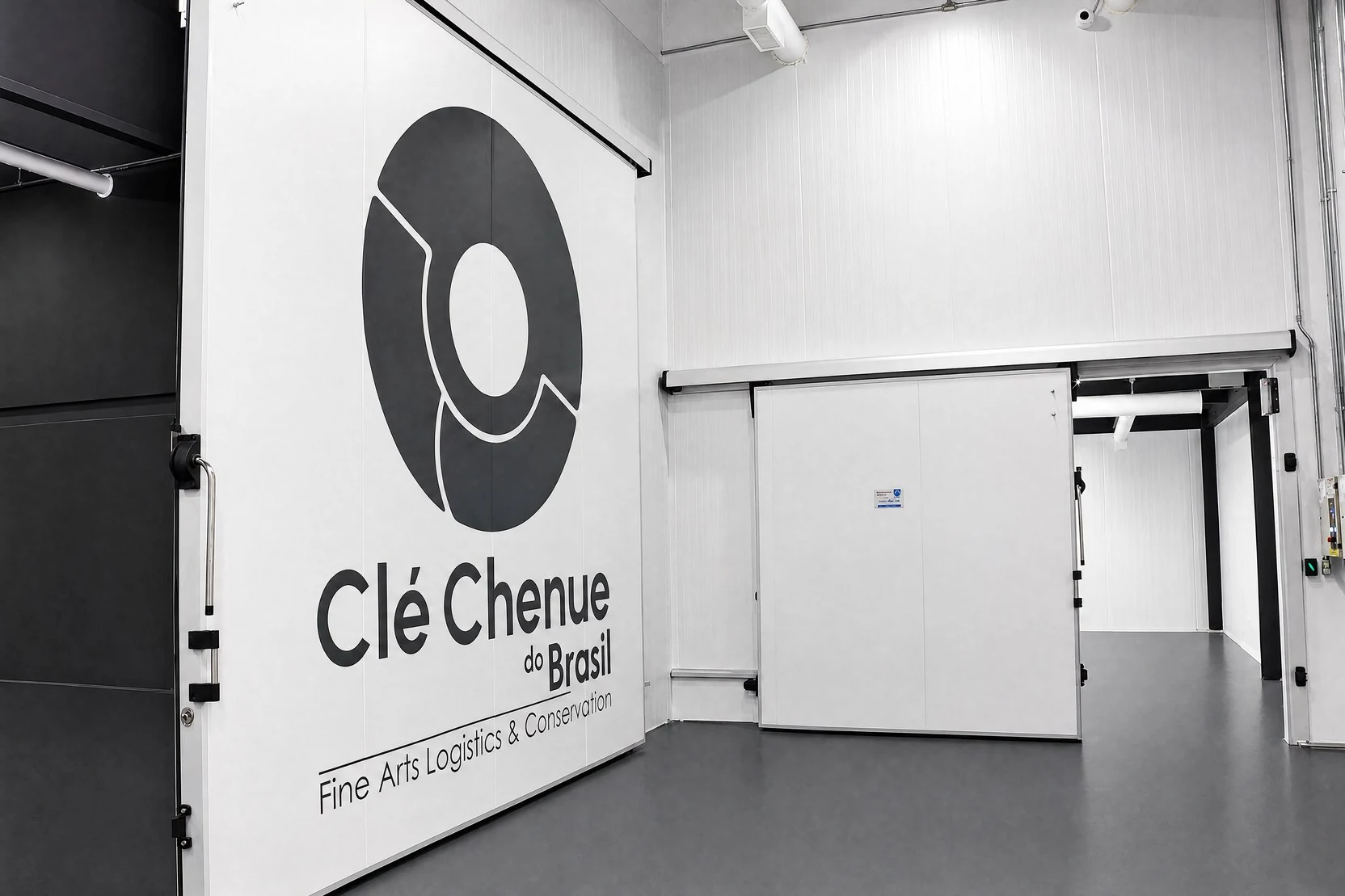
Clé Chenue do Brasil offers 100% climate-controlled art storage, with continuous control of temperature and relative humidity to museum standards, 24/7 security and fire prevention systems, and access control and confidentiality. Clé today serves some of the most important Brazilian museums. Private collectors can rent a private room starting at 25 m² or keep their works in a shared area managed by Clé, in both cases with the same infrastructure made available to museums.
Talk to our specialists to learn about the solutions available for your collection.