
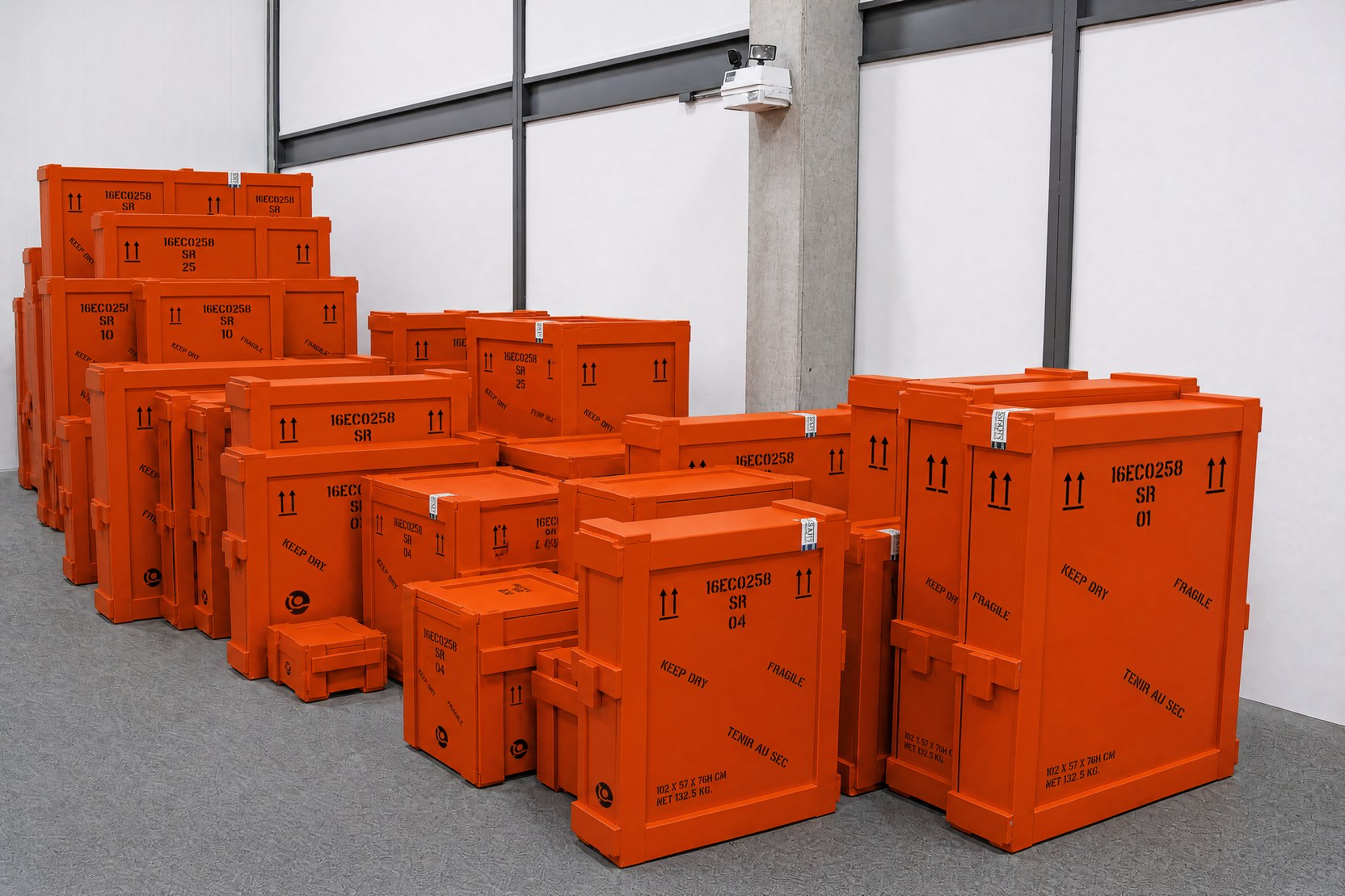
What protects the artwork is the packaging.
And that is why it is never bought off the shelf. Our workshop designs and builds each solution to measure, based on a survey that assesses the work, the route and the travel time. The result is a protection scale that matches the risk of each journey.
Survey and design
Every packaging solution starts with a survey. Our technicians assess fragility, dimensions, weight and value, as well as the route and travel time, to determine the appropriate protection level.
The packaging design is documented and accompanies the work: the work changes, the packaging changes. The standard, never.
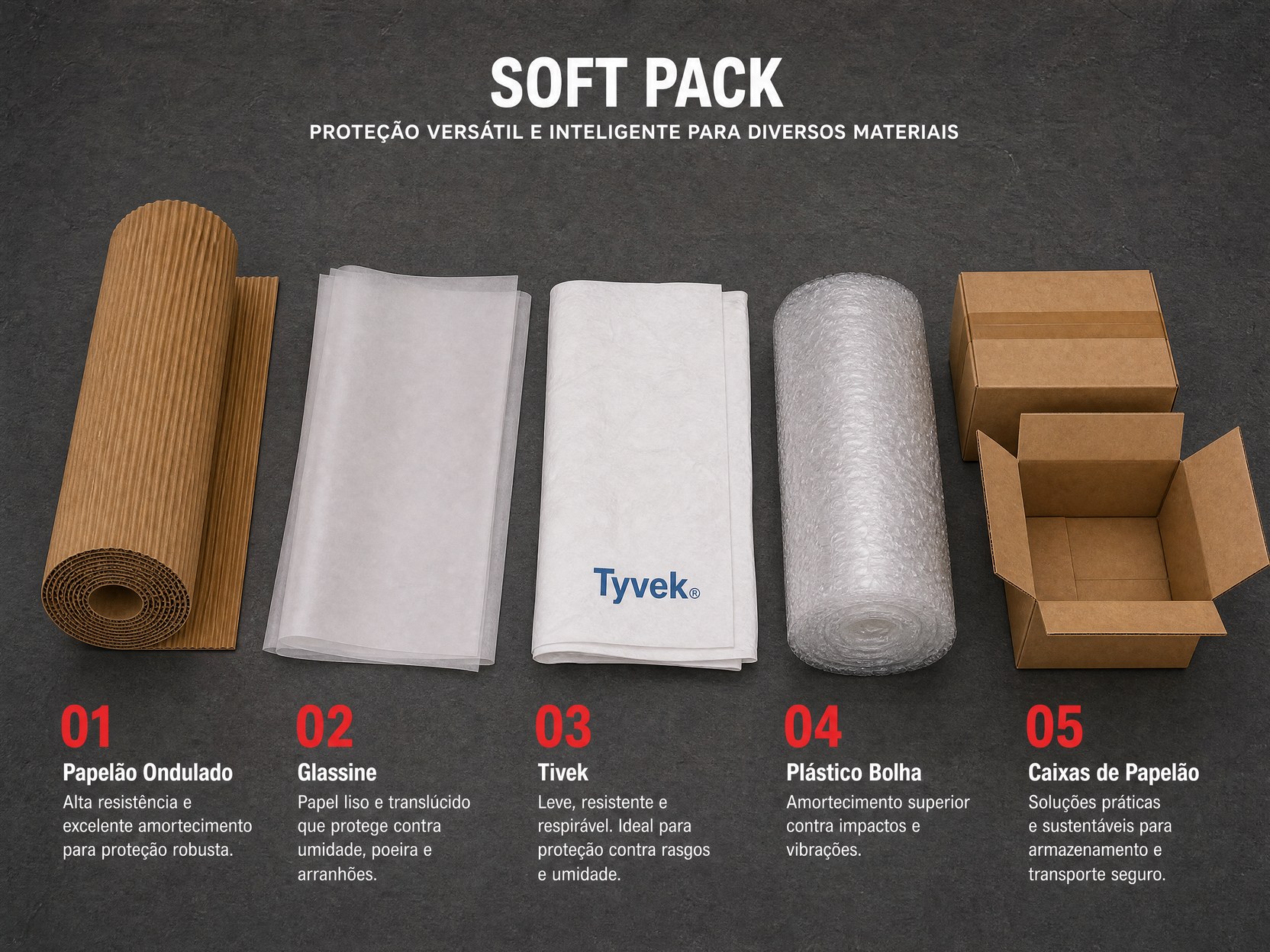
Soft packing
For quick, short-distance moves: acid-free acrylic blanket and glassine paper wrap the work with surface protection and handling agility, without compromising museum standards.
The lightest solution on the scale, recommended for internal moves, short transits between museums and local returns.
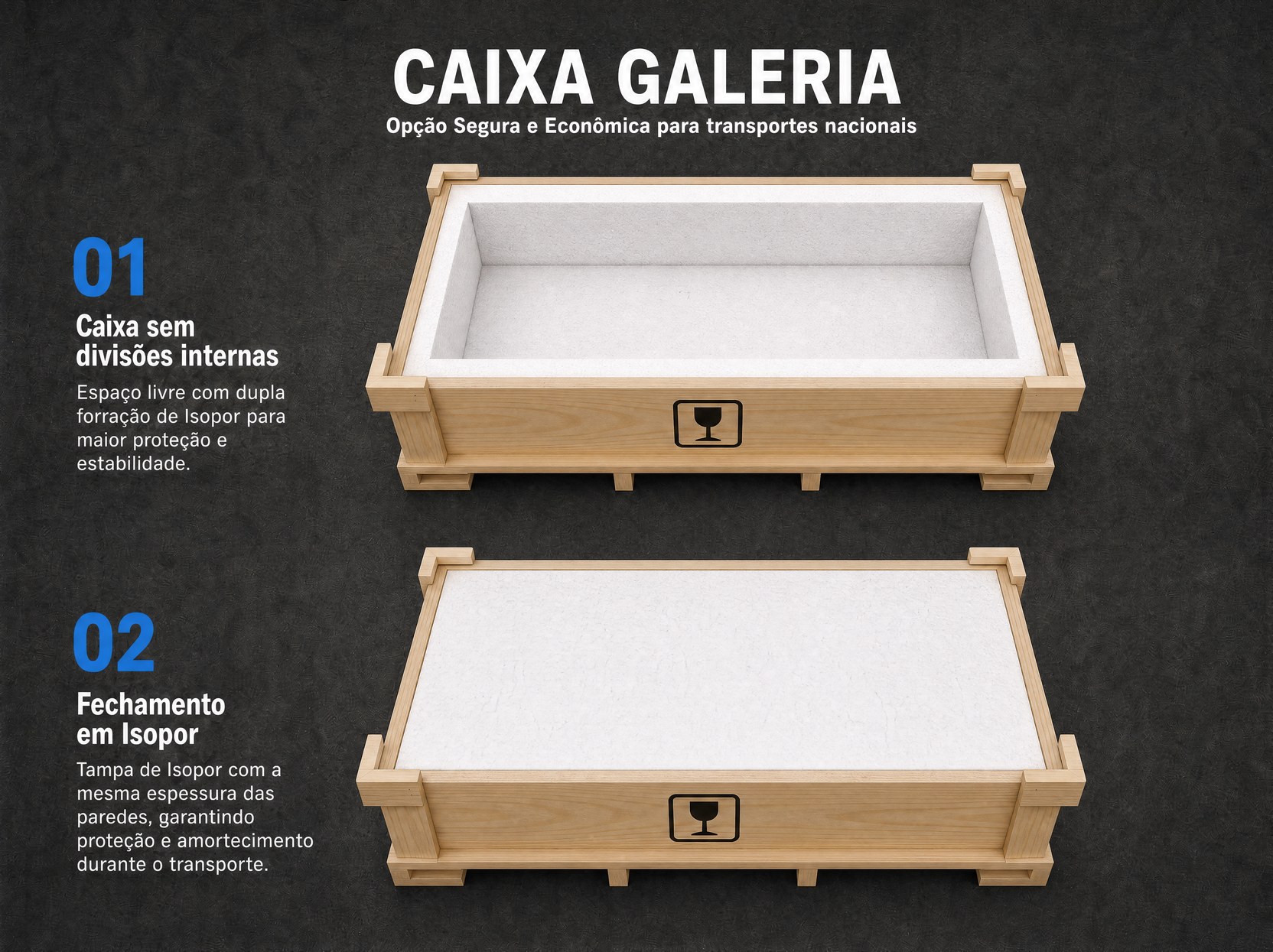
Gallery Crate
Designed for the frequent transit of galleries, fairs and collectors: a lightweight plywood structure with foam corners cut to the shape of the work, offering mechanical protection without the weight of a museum crate.
Ideal for national road transport, post-fair returns and circulation between galleries. Reusable and easy to open and close.
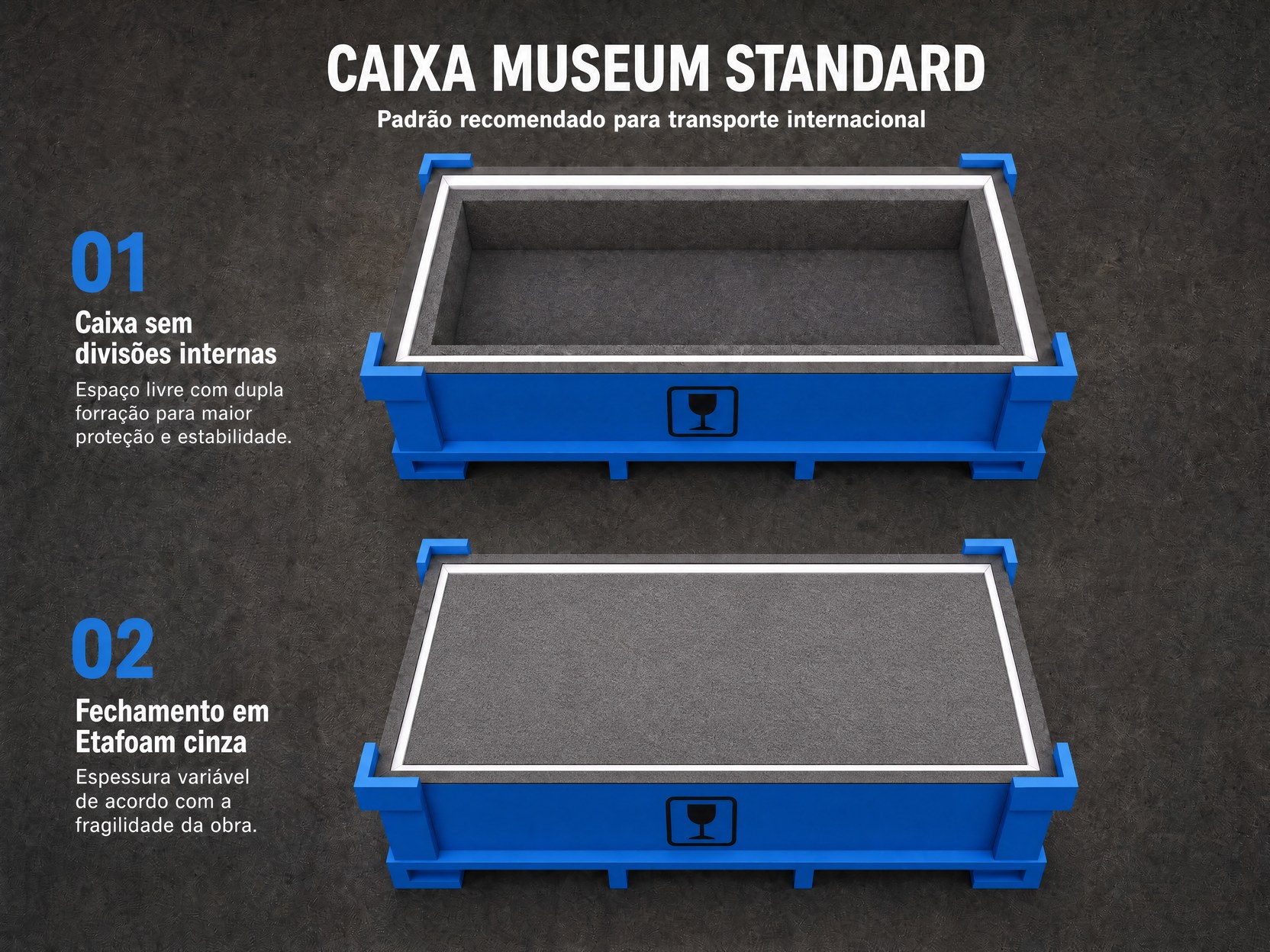
Museum Standard Crate
Recommended standard for international transport: a crate without internal divisions, with free space and double Etafoam lining for greater protection and stability. The grey Etafoam closure has variable thickness according to the fragility of the work.
Built from 100% reforested wood with phytosanitary treatment (ISPM-15), accepted by customs worldwide. Each crate receives handling labels, transport direction markings and a numbered seal.
- International standard (ISPM-15)
- Double Etafoam lining
- Variable thickness per work
- Numbered and traceable seal
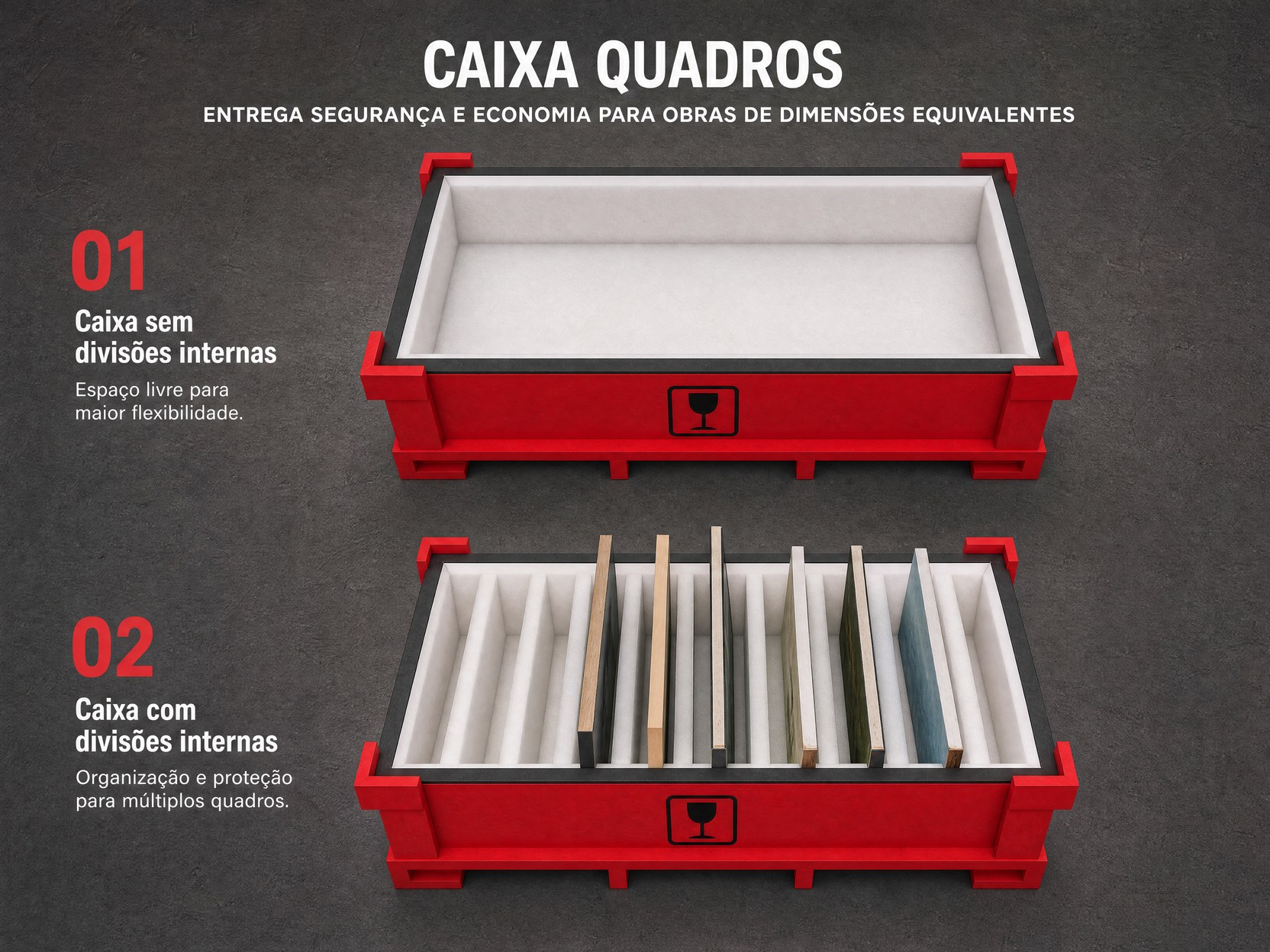
Painting Crate
Developed specifically for paintings and framed works: the artwork travels suspended by foam corners that eliminate contact with the crate walls, absorbing vibrations and impacts without pressing the pictorial surface.
Available in standard (national transport) and reinforced (international air transport) versions, always with acid-free materials in contact with the work.
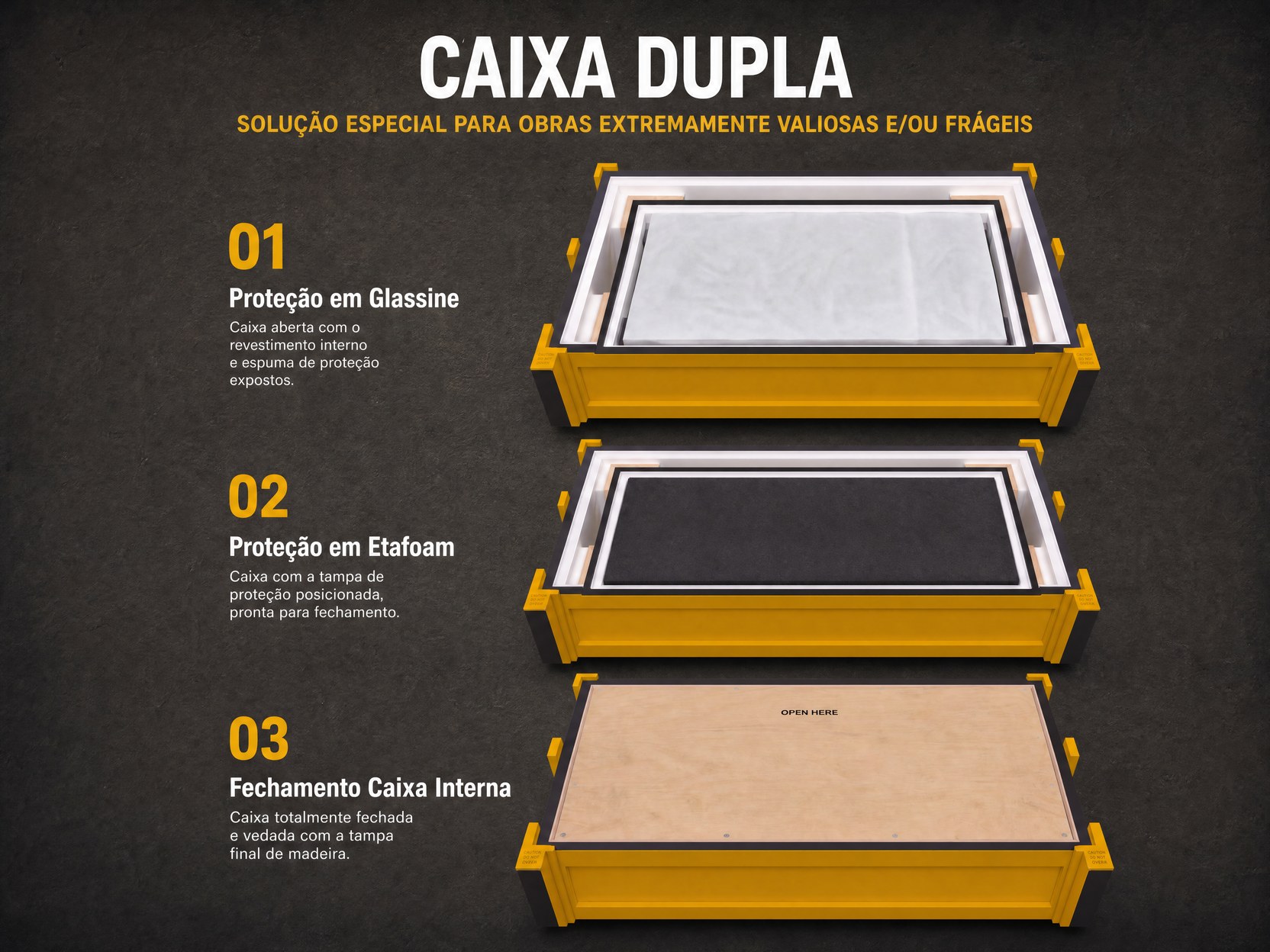
Double crate
The highest level of protection, for ultrasensitive works and long crossings: one crate inside another, creating thermal and hygrometric inertia. The climate outside changes; inside, almost nothing.
Recommended for international museum loans, long touring exhibitions and works requiring strict temperature and humidity control throughout the journey.
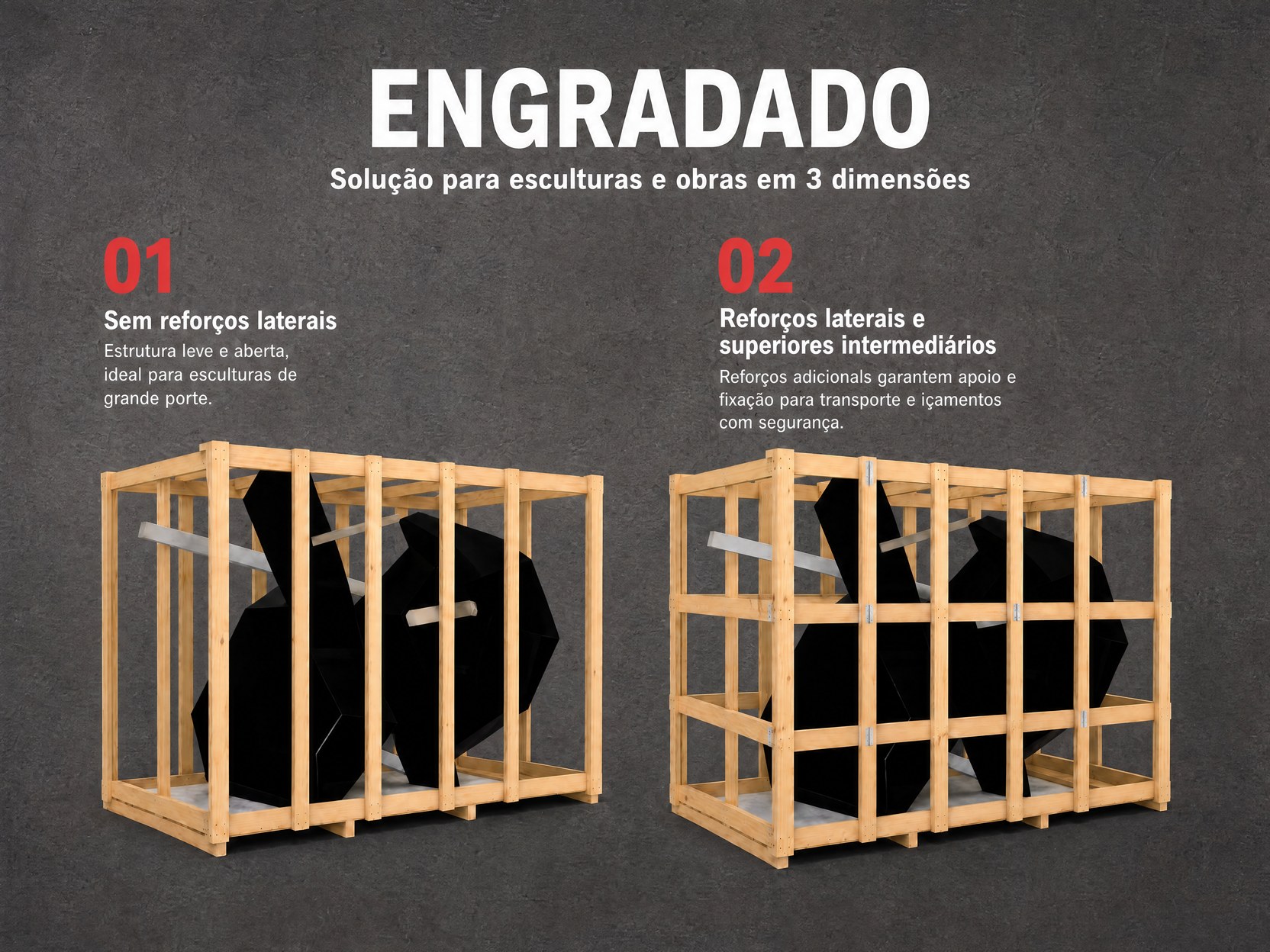
Open crate
Sculptures and large formats travel in custom-built open crates that absorb impact and provide safe handling points without enclosing the work in a sealed volume.
The open structure allows visual inspection and ventilation while maintaining the mechanical protection that transport demands.